

My Favorite Springtime Bowl
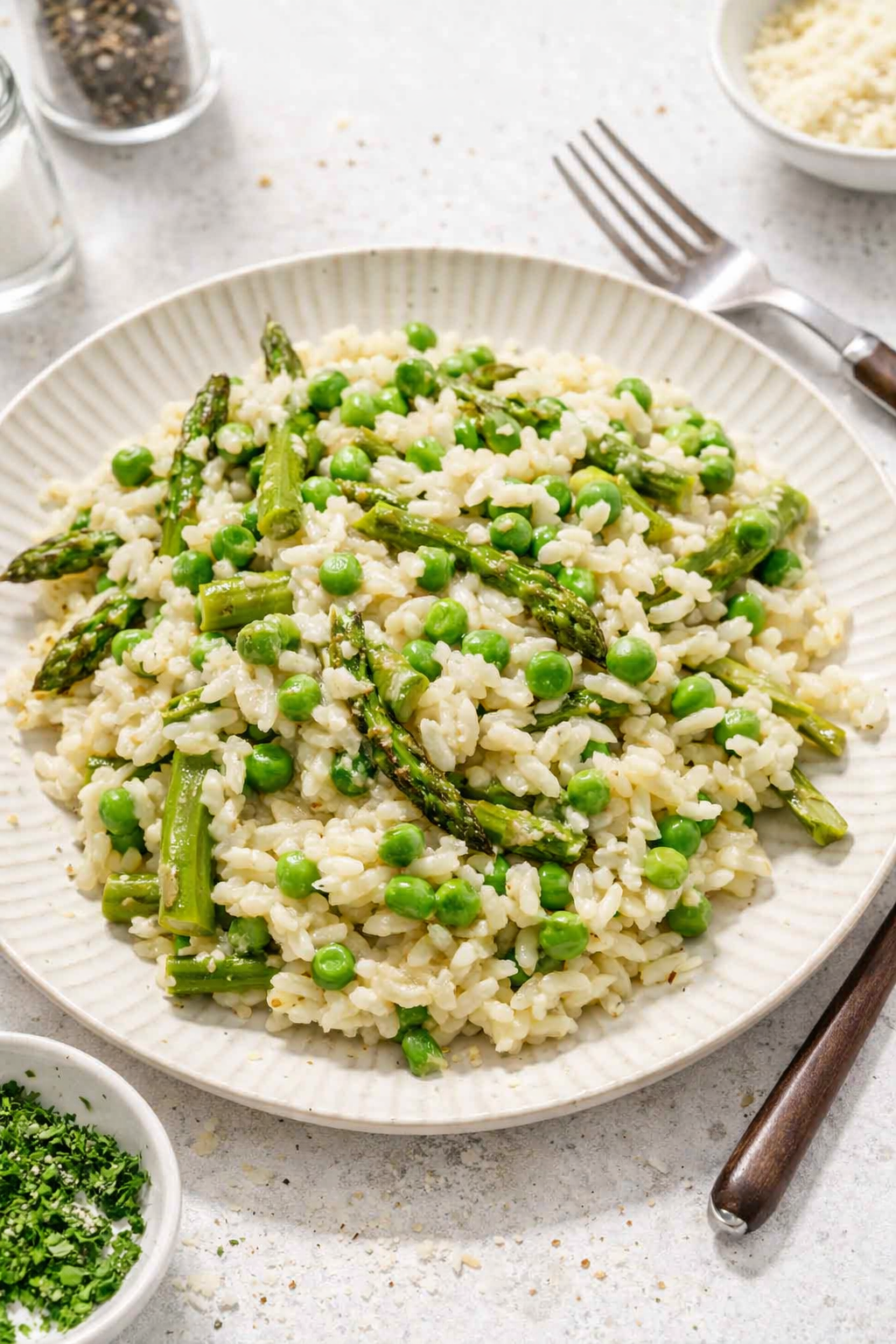
I call this my favorite spring risotto recipe. It feels like a hug in a bowl. The green peas and asparagus just sing of new beginnings. Doesn’t that smell amazing? I make it when the days get longer and warmer.
This creamy risotto is simpler than you think. You just stir and add broth slowly. It’s a peaceful, steady rhythm. That’s why this matters. Cooking slowly lets you breathe and relax. What’s your favorite season to cook for?
A Little Story from My Garden
I first made this pea and asparagus risotto for my grandson. He said it looked “too green.” But he ate two big bowls! I still laugh at that. Now he asks for it every spring. It’s our little tradition.
Fun fact: Asparagus grows so fast you can almost watch it. That fresh, quick energy is why it tastes so good roasted. Roasting makes it sweet and tender. That’s the secret to this roasted asparagus risotto. Have you ever tried growing your own food?
Why This Simple Supper Works
This is a perfect weeknight dinner risotto. You likely have most things in your kitchen. It feels fancy but is truly a simple risotto. The stirring is the hardest part. And that’s not hard at all!
It’s also a wonderful vegetarian risotto that fills you up. The rice and cheese give you good energy. That’s why this matters. A meal can be both comforting and good for you. Do you prefer creamy or brothy rice dishes?
Tips for the Best Risotto
Use a good broth. It’s the flavor of the whole pot. And please, use real butter and parmesan. They make it rich and silky. This is how you get that creamy risotto dream.
Don’t rush the broth. Add one ladle at a time. Let the rice drink it up. This patience gives you the perfect texture. Your risotto with peas will be creamy, not soupy. Trust an old grandma on this one!
A Bowl for Almost Everyone
This is a naturally gluten free risotto. The arborio rice has no gluten at all. So many friends can enjoy it at my table. I love that.
The lemon zest at the end is magic. It wakes up all the other flavors. It makes the peas pop and the asparagus shine. This easy risotto recipe is a complete, happy meal. What would you serve on the side with it? I’d love to hear your ideas.
Instructions
Step 1: First, roast your asparagus. Toss it with oil, salt, and pepper. Roast until tender and a little brown. This simple step makes your roasted asparagus risotto taste amazing. Doesn’t that smell amazing? I still laugh at that time I forgot to set the timer.
Step 2: Warm your broth in a small pot. Keep it simmering gently. Now, melt butter in a big pan. Cook the shallot until it’s soft. (A hard-learned tip: use a wooden spoon to stir.) This is the start of your perfect spring risotto recipe.
Step 3: Add the rice. Stir for two minutes to toast it. Pour in the white wine next. Stir until the wine is gone. This creamy risotto base is very important. What do you think toasting the rice does? Share below!
Step 4: Now, add broth one ladle at a time. Stir and let it absorb. Keep going for about 20 minutes. This makes a simple risotto so creamy. Your weeknight dinner risotto is almost ready. It’s a good time for a little dance.
Step 5: Stir in butter, cheese, and lemon juice. Add the peas and roasted asparagus. Your pea and asparagus risotto is now a beautiful green. This vegetarian risotto is so comforting. Top with lemon zest and serve right away.
Creative Twists
Swap the peas for fresh sugar snap peas. They add a wonderful crunch. Top with crispy prosciutto bits. It gives a nice salty contrast. Use a sprinkle of fresh mint. It makes the risotto with peas taste like spring. Which one would you try first? Comment below!
Serving & Pairing Ideas
This gluten free risotto is a full meal. But I love it with a simple salad. A bright lemon vinaigrette is perfect. You can also add a garlic bread on the side for dipping. For a fancy touch, serve it in a wide, shallow bowl. Which would you choose tonight?
Keeping Your Spring Risotto Fresh
This creamy risotto is best eaten right away. But leftovers happen. Let your risotto cool completely first. Then store it in a sealed container in the fridge. It will keep well for about three days. The peas and asparagus stay bright green this way.
You can freeze this simple risotto too. Portion it into single servings. Use freezer-safe bags or containers. It will last for a month. Thaw it in the fridge overnight when you are ready. I remember my first time freezing a creamy dinner. I was so pleased it worked.
Reheating is key for a creamy texture. Add a splash of broth or water to a saucepan. Warm the risotto over medium-low heat. Stir it gently until it’s hot and creamy again. This method brings back its lovely texture. Batch cooking this easy risotto recipe means a delicious weeknight dinner is always close. It saves time and reduces waste.
Have you ever tried storing it this way? Share below!
Simple Fixes for Common Risotto Hiccups
Risotto seems tricky, but it is forgiving. The first issue is crunchy rice. This means you added broth too fast. Let each ladle absorb fully before adding the next. I once rushed this step. My dinner was not the creamy risotto I wanted.
The second issue is a gloppy texture. Your heat was likely too high. Keep the pot at a gentle, constant simmer. Stir it occasionally, but not constantly. This patience gives you perfect, separate grains. Getting this right builds real cooking confidence. You learn to trust the process.
The third issue is bland flavor. Season your broth well. The rice soaks up that seasoned liquid. Finish with good parmesan and lemon juice. This brightens the whole vegetarian risotto. Good seasoning makes every ingredient sing. It turns simple food into something special.
Which of these problems have you run into before?
Your Quick Questions, Answered
How do you cook pasta properly?
Use a large pot with plenty of water. Bring the water to a rolling boil before adding the pasta. This keeps the noodles from sticking together. Stir the pasta a few times during cooking. Follow the time on the package as a guide, but always taste for doneness. Properly cooked pasta should be tender but still have a slight bite, which is called al dente.
What is the secret to cooking pasta?
The secret is in the water. You must salt your pasta water generously. It should taste like the sea. This seasons the pasta from the inside out. That is the only way to get great flavor into the noodle itself. No amount of sauce can fix bland pasta. Well-salted water is the true foundation for any good pasta dish.
How much salt do you put in pasta water?
Use about one to two tablespoons of salt for a large pot of water. This might seem like a lot, but most of it goes down the drain. The pasta only absorbs a small amount. This salt is crucial for flavor. It makes your pasta taste good before you even add sauce. Think of it as seasoning the food, not the water.
Should you add oil to pasta water?
No, do not add oil to the water. Oil floats on top and can coat the pasta. This makes it harder for your delicious sauce to stick later. To prevent sticking, just use plenty of water and stir the pasta after you add it. A good stir in the beginning is the best trick for perfect, separate noodles.
How do you know when pasta is al dente?
Start tasting a minute or two before the package time says it’s done. Al dente means “to the tooth” in Italian. The pasta should be tender but offer a slight resistance when you bite it. There should be no hard, chalky center. It is a pleasant chew, not soft or mushy. This texture is perfect for holding sauce.
What is the best way to drain and sauce pasta?
Do not over-drain your pasta. Save about a cup of the starchy cooking water first. Then drain the pasta. Immediately add the noodles to your waiting sauce in the pan. Toss everything together over low heat. The starchy water helps the sauce cling to each noodle, creating a silky, cohesive dish. It’s the professional’s secret for a creamy finish.
Which tip will you try first?
My Kitchen Table Send-Off
I hope you love this spring risotto recipe. It brings the garden right to your plate. The roasted asparagus and sweet peas are a happy taste of spring. Fun fact: Arborio rice gets its creaminess from a special starch. It makes this gluten free risotto so luxurious.
Cooking should be a joy, not a worry. This easy risotto recipe is here for your busy nights. I love hearing your stories from the kitchen. It makes my day to read them.
Have you tried this recipe? Tell me all about it in the comments. Share your own little twists. Did you add extra lemon? Try a different cheese? I want to hear it all.
Happy cooking!
—Clara Cooper
Creamy Asparagus Risotto with Spring Peas
Description
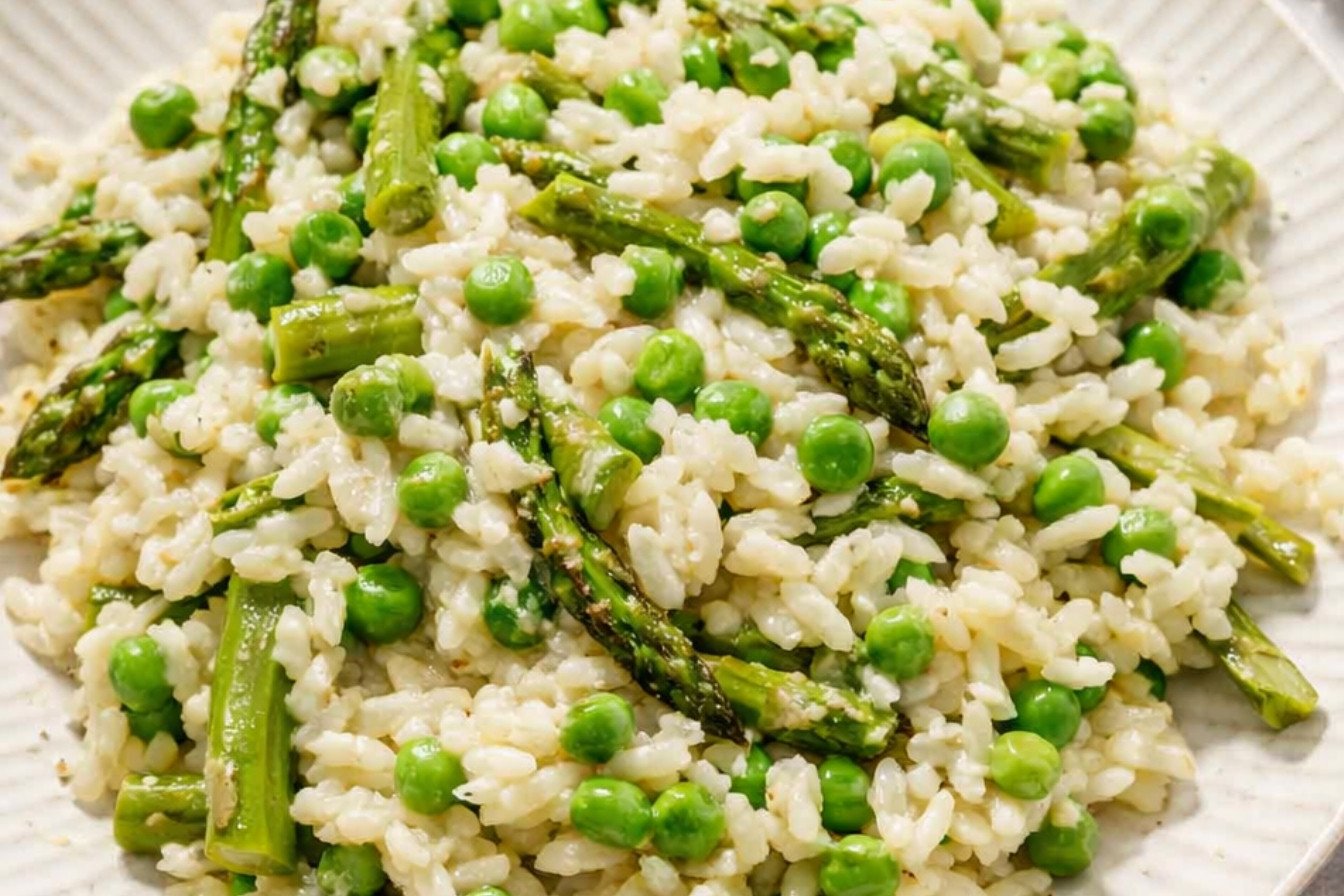
A creamy, comforting risotto featuring roasted asparagus and sweet spring peas, finished with lemon and parmesan.
Ingredients
Instructions
- Preheat oven to 425°F. Toss chopped asparagus in olive oil and season with a dash of salt, pepper and garlic powder if desired. Roast the asparagus for about 15 minutes, until tender and starting to slightly brown. Remove from the oven and set aside.
- Warm about 5 cups of broth or stock in a saucepan to a simmer at medium heat.
- Melt 2 tablespoons butter over medium heat in a separate pan (straight sided skillet or dutch oven work well). Add shallot and sauté for 2-3 minutes or until shallots begin to become translucent. Add in garlic and cook another minute.
- Add arborio rice and stir constantly to coat and toast for about 1 to 2 minutes. Add in white wine and allow to absorb into the rice, stirring frequently.
- Begin adding one ladle full of heated broth into the pot and stir occasionally letting the broth fully absorb into the rice. Continue adding ladles of broth one at a time, allowing them to fully absorb before adding another until the rice is al dente, soft and chewy with a very slight bite in the center. This will take roughly 20 minutes, more or less. Adjust heat to keep the risotto at a constant simmer.
- When the rice is al dente, add one more ladle of broth, remaining butter, parmesan, and lemon juice and stir constantly until smooth and creamy but not soupy. Add in the peas and roasted asparagus and stir until peas are cooked.
- Add lemon zest and freshly chopped parsley over top. Serve immediately with extra parmesan on top.
Notes
- For a richer flavor, use homemade vegetable or chicken stock. Stirring constantly during the final stage ensures a luxuriously creamy texture.