
My Robin’s Egg Macaron Adventure
I wanted to make a special Easter treat last year. So I tried these Robin’s egg macarons. They looked like little blue birds’ eggs! I was a bit nervous. Macarons can be tricky. But this French macaron recipe was my guide. It walked me through every step.
My first batch did not have feet. You know, the ruffled bottom. I was so disappointed. Then I learned to bang the tray hard. This gets the air bubbles out. That simple fix changed everything. Getting those perfect little feet made me so happy. It showed me that details really matter in baking.
Why Getting the Batter Right Matters
The heart of how to make macarons is the batter. You fold it until it flows like lava. Not too thick, not too runny. I test it by lifting my spatula. The batter should fall in one smooth ribbon. It takes practice to see it. I still hold my breath a little every time.
If the batter is under-mixed, the tops crack. If it’s over-mixed, they spread too flat. This is the biggest part of macaron troubleshooting. But don’t be scared! My tip is to go slow. Fold a few times, then test. You will learn what “just right” looks like. Have you ever had a baking fail that taught you a good lesson?
The Fun of Shaping and Speckling
Making them egg-shaped is the fun part. You pipe a little blob, then pull up to a point. They look like plump little eggs. I laugh at my first few. They were all different sizes! But that’s okay. Homemade treats have character. After they bake and cool, the real magic happens.
You make the speckles with food coloring and a drop of vodka. Just flick your brush over a fork. It makes perfect little brown dots. *Fun fact*: Real robin’s eggs are blue because of a bile pigment. Our version is much tastier! These speckled macarons are my favorite Easter dessert ideas. What is your favorite springtime treat to make?
A Sunny Lemon Surprise Inside
The filling is a dream. It’s a fluffy meringue with a dot of lemon curd. The sweet meringue and tangy lemon are perfect together. These are truly the best lemon meringue macarons. The bright yellow curd is like a hidden sunshine. Doesn’t that sound amazing?
You pipe a circle of meringue on one shell. Then add a small spoonful of curd in the middle. Put the top on gently. The filling needs to mature. Let them sit in the fridge overnight. This makes the shells soft and the flavors blend. Waiting is the hardest part!
You Can Make These Egg-Shaped Macarons
I call this a beginner macaron recipe because it explains the “why”. Knowing why you bang the tray helps. Knowing why you let them dry is key. These little egg-shaped macarons are a labor of love. But the joy they bring is worth it.
Seeing a tray of perfect little blue eggs makes me smile. Sharing them with family is even better. The look on my grandson’s face was priceless. He thought they were too pretty to eat! But he ate two. Do you think you’ll try making these Easter egg macarons this year?
Instructions
Step 1: Let’s make our French macaron recipe shells. Blend almond flour and powdered sugar until super fine. This gives you smooth Easter egg macarons. Whip the egg whites and sugar into stiff, shiny peaks. Add a little blue coloring. It looks bright now, but it will soften. (A hard-learned tip: Process that flour well for perfect feet!)
Step 2: Gently fold the dry mix into the meringue. Keep folding until the batter flows like lava. This is the key to how to make macarons right. Pour it into a piping bag. Pipe little egg shapes. I still laugh at my first lumpy ones. What’s your favorite baking memory? Share below!
Step 3: Tap the tray to pop bubbles. Let the egg-shaped macarons dry until not sticky. This creates their pretty “feet”. Bake until they don’t wiggle. Cool completely. For a beginner macaron recipe, patience here is everything. Doesn’t that smell amazing?
Step 4: Now for the fun speckles! Mix brown food coloring with a few drops of vodka. Flick it onto your blue shells with a brush. You’ve made lovely speckled macarons just like a robin’s egg. Let them dry while you make the fluffy meringue filling. (Use gel food coloring for vibrant spots that won’t bleed).
Step 5: Time to assemble our lemon meringue macarons. Pipe meringue around a shell. Add a dollop of tangy lemon curd inside. Top with its matching shell. Press gently. For the best Easter dessert ideas, let them rest in the fridge overnight. The flavors become magical friends.
Creative Twists
Pastel Rainbow: Make batches in pink, yellow, and lavender for a spring mix.
Chocolate Nest: Place each Robin’s egg macaron on a little nest of chocolate shreds.
Different Filling: Try strawberry jam or vanilla buttercream inside instead.
Which one would you try first? Comment below!
Serving & Pairing Ideas
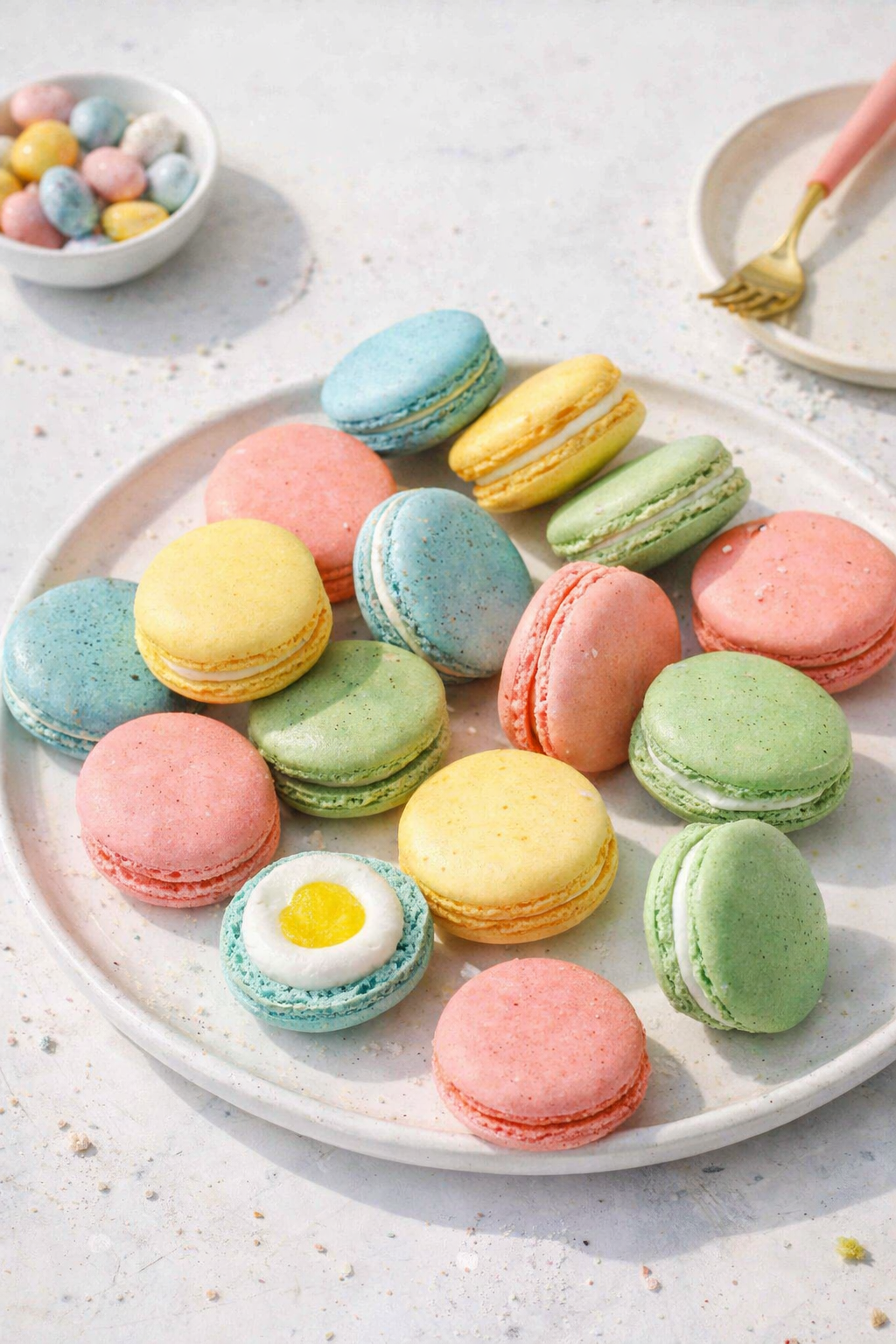
Place these Easter egg macarons on a pastel plate for a pretty table. They pair wonderfully with a cup of milky tea or a glass of cold lemonade. For a bigger spread, add some fresh berries or a simple macaron troubleshooting tip is to keep them cool until serving. Which would you choose tonight?
Keeping Your Easter Egg Macarons Fresh
Let’s talk about storing these sweet treats. Fridge them in a sealed container for up to five days. They actually taste better after a day. The flavors get to know each other.
You can freeze the unfilled shells for months. I wrap them in layers. I use parchment paper first, then foil. This keeps them safe from freezer smells.
Thaw them in the fridge overnight. Then fill them. I remember my first batch of Easter egg macarons. I left them on the counter. They got soggy. I learned my lesson about airtight containers.
Batch cooking the shells saves big holiday stress. You can bake them weeks ahead. This matters because holidays should be joyful, not rushed. You get to enjoy your own party.
Have you ever tried storing macarons this way? Share below!
Fixing Common Macaron Mistakes
Even grandmas have kitchen troubles. First, hollow shells. This often means you under-mixed your batter. You must fold until it flows like lava. I once stopped too early. My macarons had no feet.
Second, cracked tops. Your oven might be too hot. An oven thermometer is a cook’s best friend. Letting the shells dry completely also prevents this. They need that skin to form.
Third, no feet. This is usually from under-drying. Touch the top lightly. It should not stick to your finger. Getting this right builds your cooking confidence. It turns fear into fun.
Fixing these issues matters for flavor too. A perfect shell has the best chew. It holds the creamy filling just right. Your Easter dessert ideas will shine.
Which of these problems have you run into before?
Your Quick Questions, Answered
What is the best filling for Easter macarons?
Lemon curd is a classic spring choice. It is bright and tangy. It pairs beautifully with sweet meringue. For these Robin’s egg macarons, I use lemon curd and Swiss meringue. The meringue pipe a border to hold the curd in. You could also use a pastel buttercream. Raspberry or vanilla would be lovely too.
How do you achieve pastel colors on macarons?
Use gel food coloring, not liquid. Add it to your meringue. A little goes a long way. The color fades when you add the dry ingredients. So make it brighter than you want. For sky blue, I use three drops. For other pastels, like pink or yellow, start with two drops. You can always add more.
What are some creative Easter macaron designs?
Egg shapes are perfect for Easter. Pipe a small oval. You can also make little chicks or bunnies. Use different tips for shapes. The fun part is decorating. Make speckled macarons to look like real robin’s eggs. Use brown food coloring and a brush. Flick it on for cute speckles.
How far in advance can you make macarons for Easter?
You can bake the shells weeks ahead. Freeze them unfilled. Thaw in the fridge overnight. Fill them one to two days before serving. This maturing time is key. The shells soften and absorb the filling’s flavor. They become perfectly chewy. This French macaron recipe is great for planning.
What are common mistakes when making macarons?
Not measuring ingredients with a scale is a big one. Almond flour must be fine. Over-mixing or under-mixing the batter causes problems. Skipping the drying time leads to cracks. A too-hot oven is another common issue. This is where macaron troubleshooting helps. Follow each step with care for the best results.
Are there any easy macaron recipes for beginners?
Yes! This recipe is a wonderful beginner macaron recipe. It has clear steps. The egg shape is forgiving. The lemon meringue filling is no-bake. *Fun fact: Macarons get their name from the Italian “maccherone,” meaning fine dough.* Start with one batch. Do not get discouraged. Every baker has a first try.
Which tip will you try first?
From My Kitchen to Yours
I hope you love making these lemon meringue macarons. They bring such spring joy. Seeing those little egg-shaped macarons on a plate makes me smile. Baking is about sharing happiness.
I would love to hear about your baking adventure. Did your family enjoy them? Did you try a different color? Your stories make my day.
Have you tried this recipe? Tell me all about it in the comments below. I read every one.
Happy cooking!
—Clara Cooper
Pastel Easter Egg Macaron Delights
Description
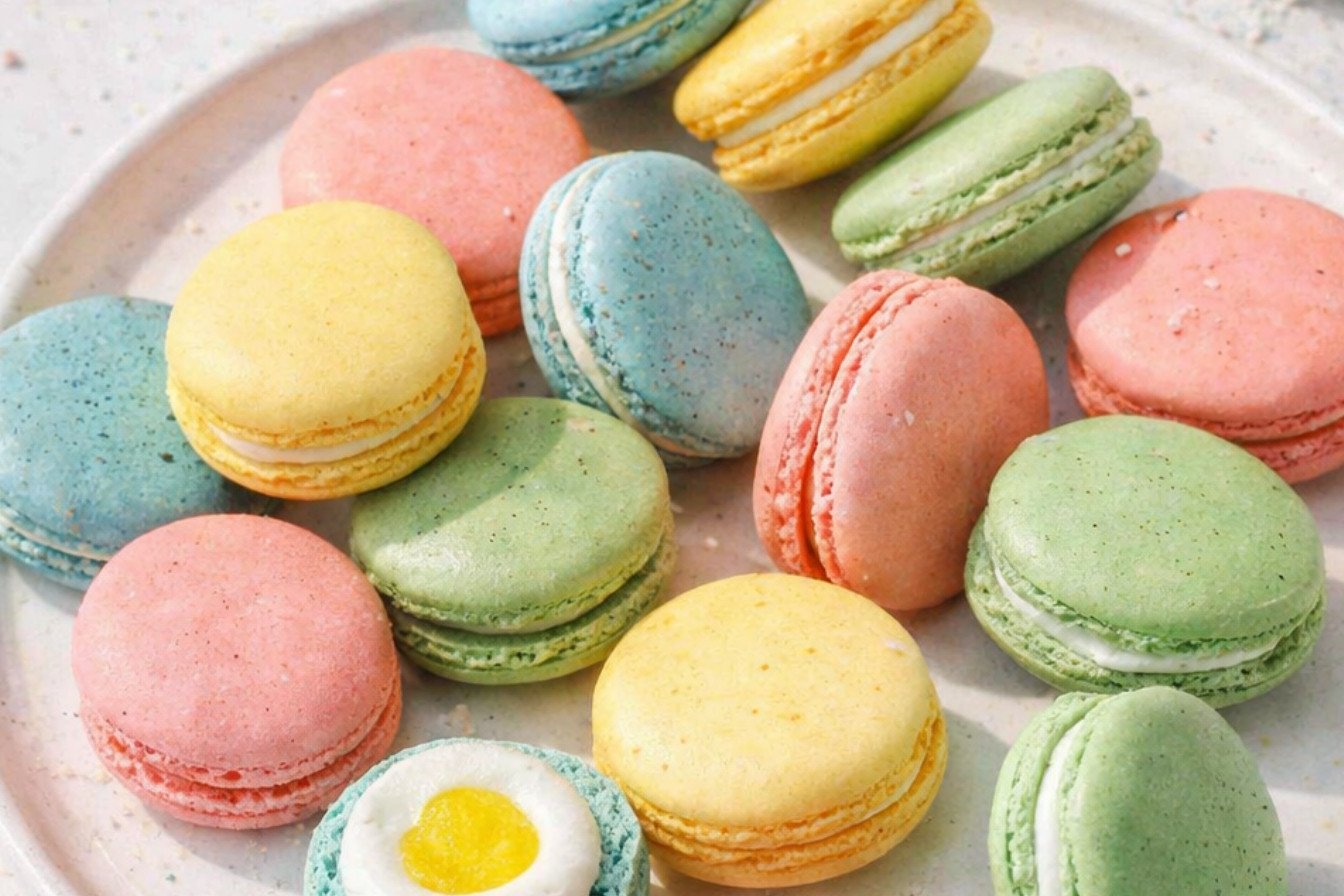
Delicate, egg-shaped sky blue macaron shells speckled with brown, filled with a sweet meringue and tangy lemon curd.
Ingredients
For the Robin’s Egg-Shaped Macaron Shells:
For the Lemon Curd and Meringue Filling:
For Decor:
Instructions
- Making the Macarons: Prepare baking sheets with silpats or parchment. Fit a piping bag with a round tip (#8). Process almond flour and powdered sugar to a superfine consistency. Set aside.
- In a stand mixer, whisk egg whites until frothy. Increase speed to medium. Once a trail forms, add sugar gradually. Increase to high and whisk to stiff peaks. Add vanilla and 3 drops blue coloring; whisk briefly to incorporate.
- Fold half the almond mixture into the meringue until incorporated. Add the rest and fold until the batter flows in a solid ribbon off the spatula, dissolving back in 10-15 seconds.
- Pipe egg shapes: squeeze a 1″ base, then move the tip up an inch to create a pointed top before pulling away. Bang trays on counter to release air bubbles. Pop any remaining bubbles with a toothpick. Let dry for 20-30 minutes until tops are matte and dry to the touch.
- Baking the Macarons: Preheat oven to 320°F/160°C. Bake one tray at a time for about 17 minutes, until set and not wiggling. Cool completely on the tray before removing.
- Decorating the Macaron Shells: Mix brown food coloring with vodka. Dip a brush and flick over a fork to speckle the shells. Let dry.
- Making the Meringue: Whisk egg whites and sugar over simmering water until 160°F (71°C). Transfer to a stand mixer, add vanilla, and whisk on medium-high for 5-6 minutes until glossy and cool. Transfer to a piping bag fitted with a tip (e.g., Wilton #10).
- Assembling the Easter Egg Macarons: Pair similar-sized shells. Pipe a meringue border on one shell, fill the center with a dollop of lemon curd, and top with the matching shell. Press gently to seal. For best flavor and texture, mature in the fridge for one day before serving.
Notes
- Macarons are best enjoyed after maturing in the fridge for 24 hours, which allows the shells to soften and the flavors to meld. Store in an airtight container in the refrigerator.